The RSMAD
Sculpture Park
Ryan Seslow Museum of Art & Design
Enter the parkWorks in a browser and in a VR headset.
WASD and drag to look, or the sticks in VR.
Ryan Seslow
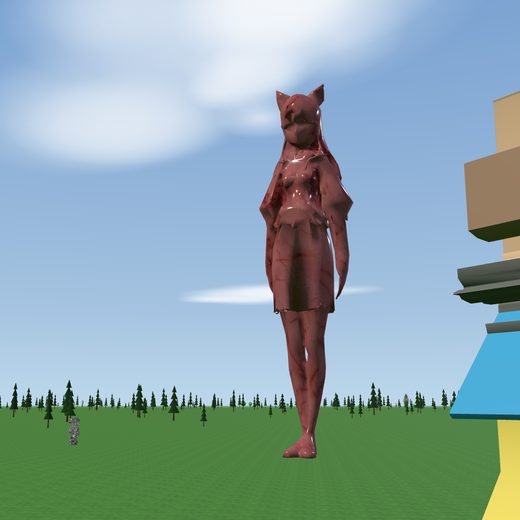
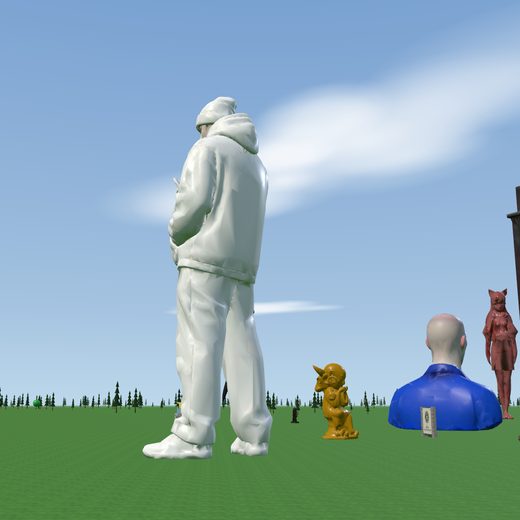
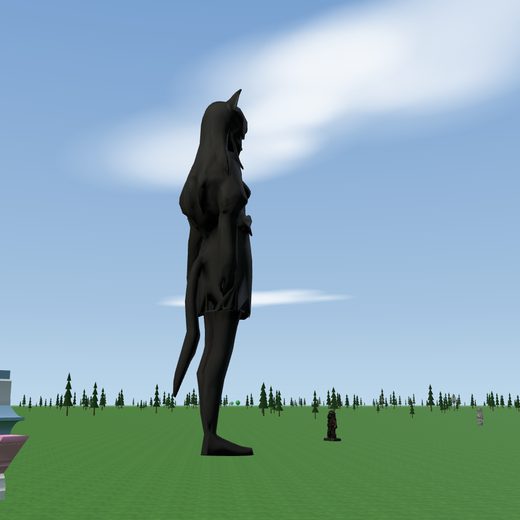
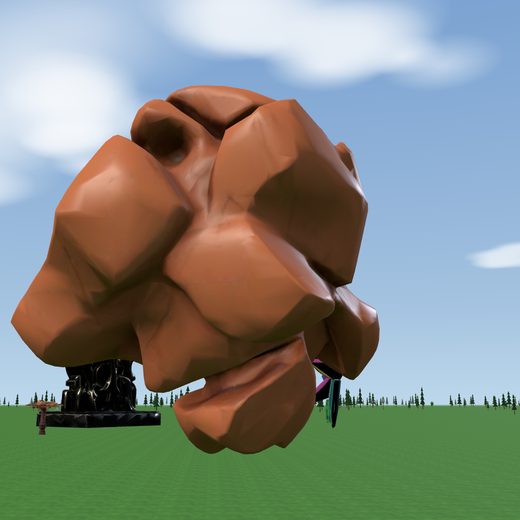
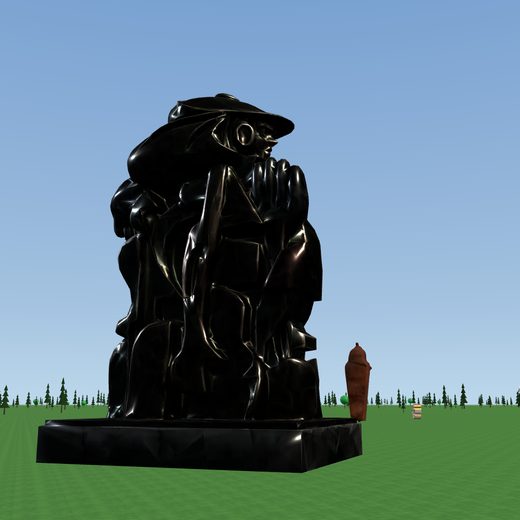
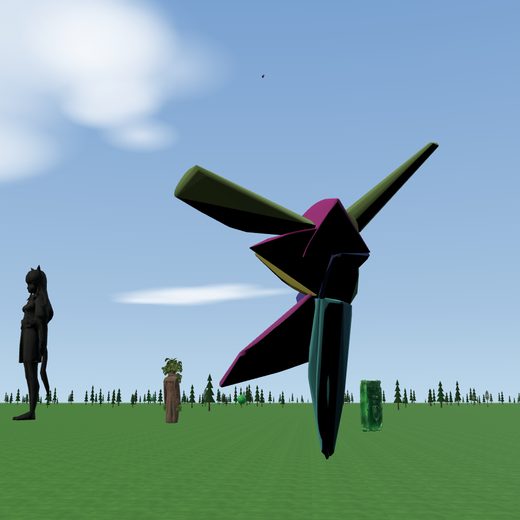
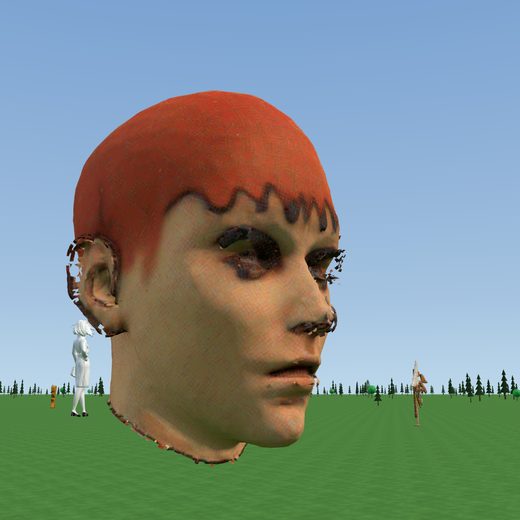
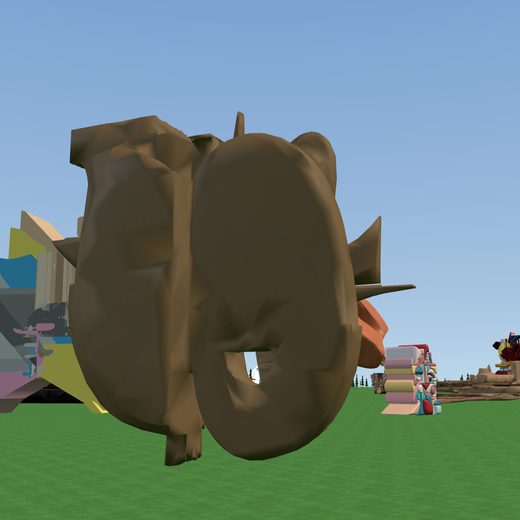
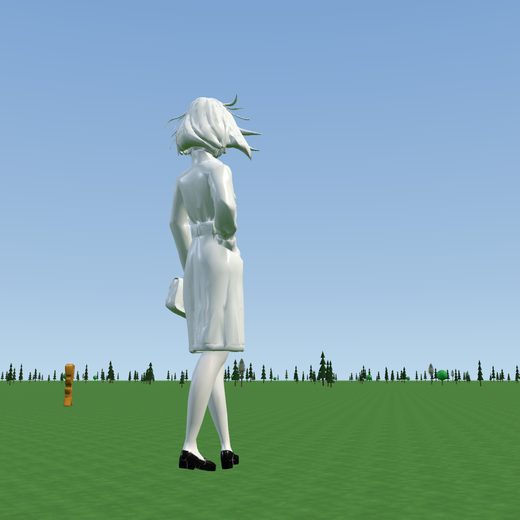
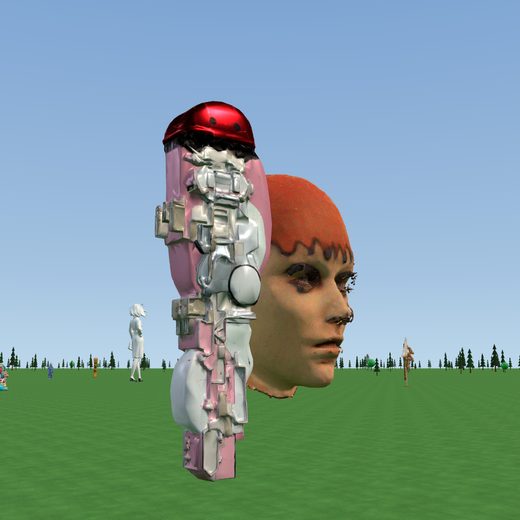
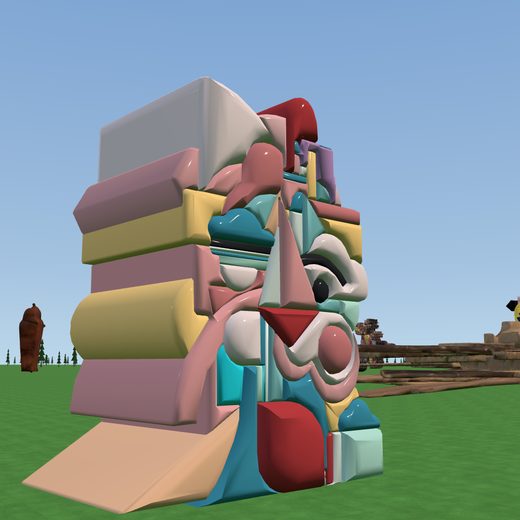
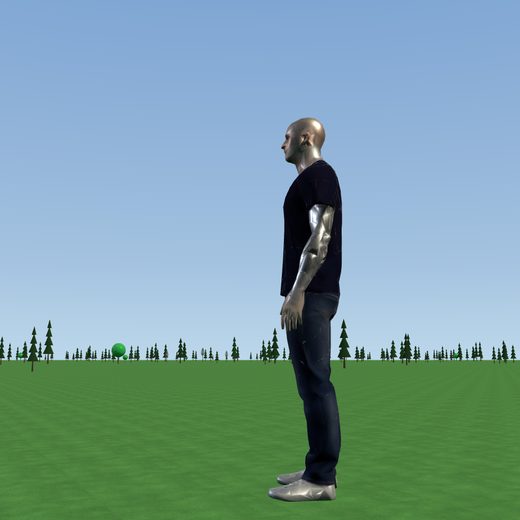
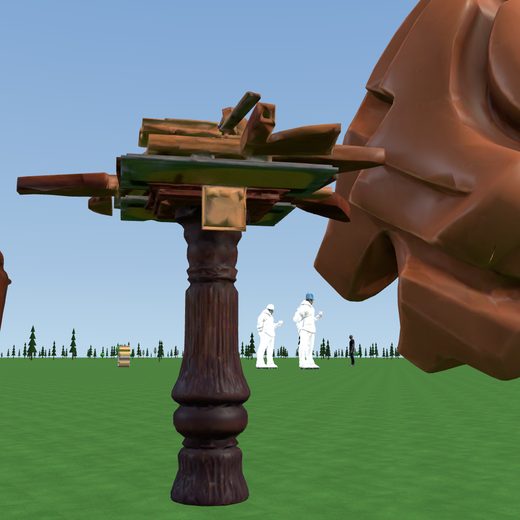
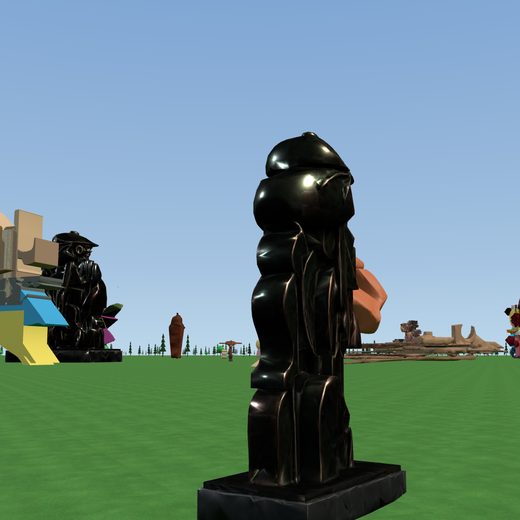
Thirty seven sculptures are standing in an open field. The smallest is eight meters tall. The tallest is a hundred and twenty nine. You can walk between them and you can fly, on a screen or in a headset, and the field runs eight hundred meters across before the trees start.
Almost all of this began as a drawing. Some on paper and some on a screen, going back years. The drawings were converted into 3D models, and the models became objects with a far side, which is a thing a drawing has never had.
Some went the other way around. I built the object first, by hand, and photographed it, and the photographs were turned back into 3D.
I have done that before, for a hard reason. For years I built sculptures out of scrap wood in my studios, cut and assembled and composed by hand. Forty of them, or more. All of them are gone. I destroyed them, not because I wanted to but because I ran out of space. No institution offered to hold them and no storage solution made sense. Being a working artist in New York City means you cannot keep everything. So I documented them and let them go.
What I kept was the photographs. The scans. The records.
This field is what the records are for. Some of what is standing here is standing because the original could not.
None of them are placed at the size they were made. The files do not agree with each other about what a meter is, so leaving them at their authored scale would have cast the whole show by accident of export. Every piece was measured, normalized, and then given a height on purpose.
Sir Tess
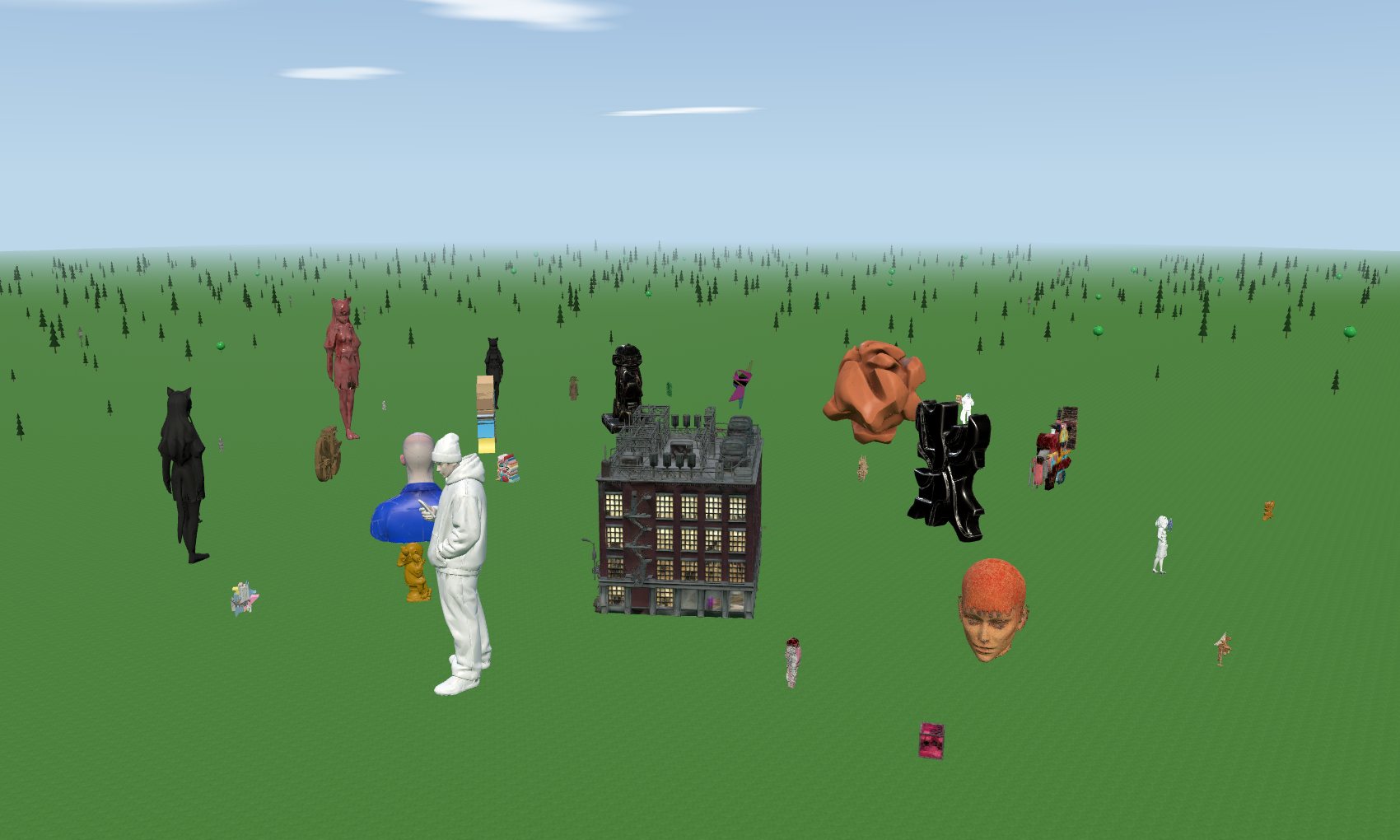
This is not really a sculpture park, Sire. It is a floating archive-world organized around the RSMAD building as its gravitational center.
The movement reveals the most important idea. Scale has been liberated. A human figure becomes monumental, a building becomes portable, trees become a thin data horizon, and sculptures behave like satellites. The archive is no longer stored inside the museum. The museum itself has become one object inside the archive.
Ryan Seslow
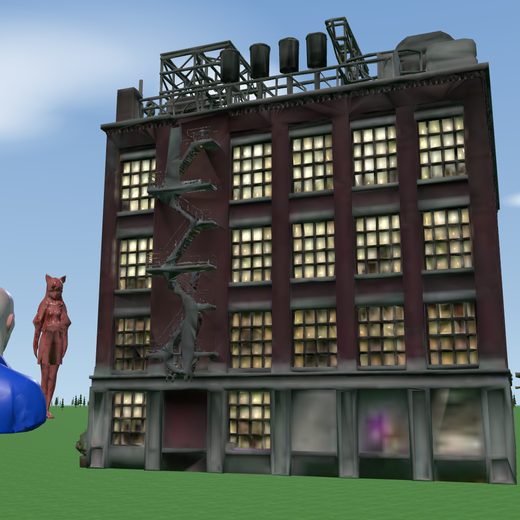
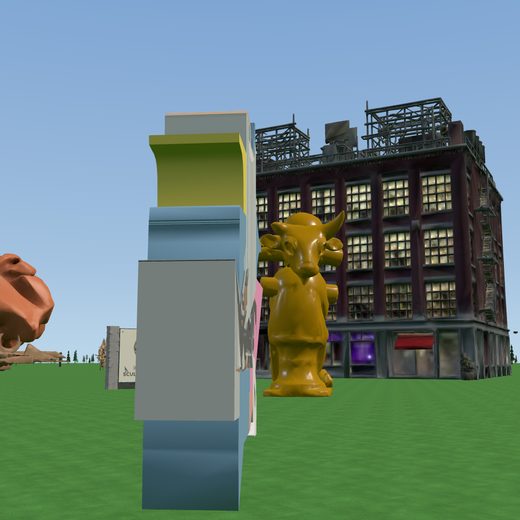
That building is AREMES HQ. It is the tallest thing here and it is the only thing with lit windows, and every time I fly back toward it I am arriving somewhere rather than looking at something.
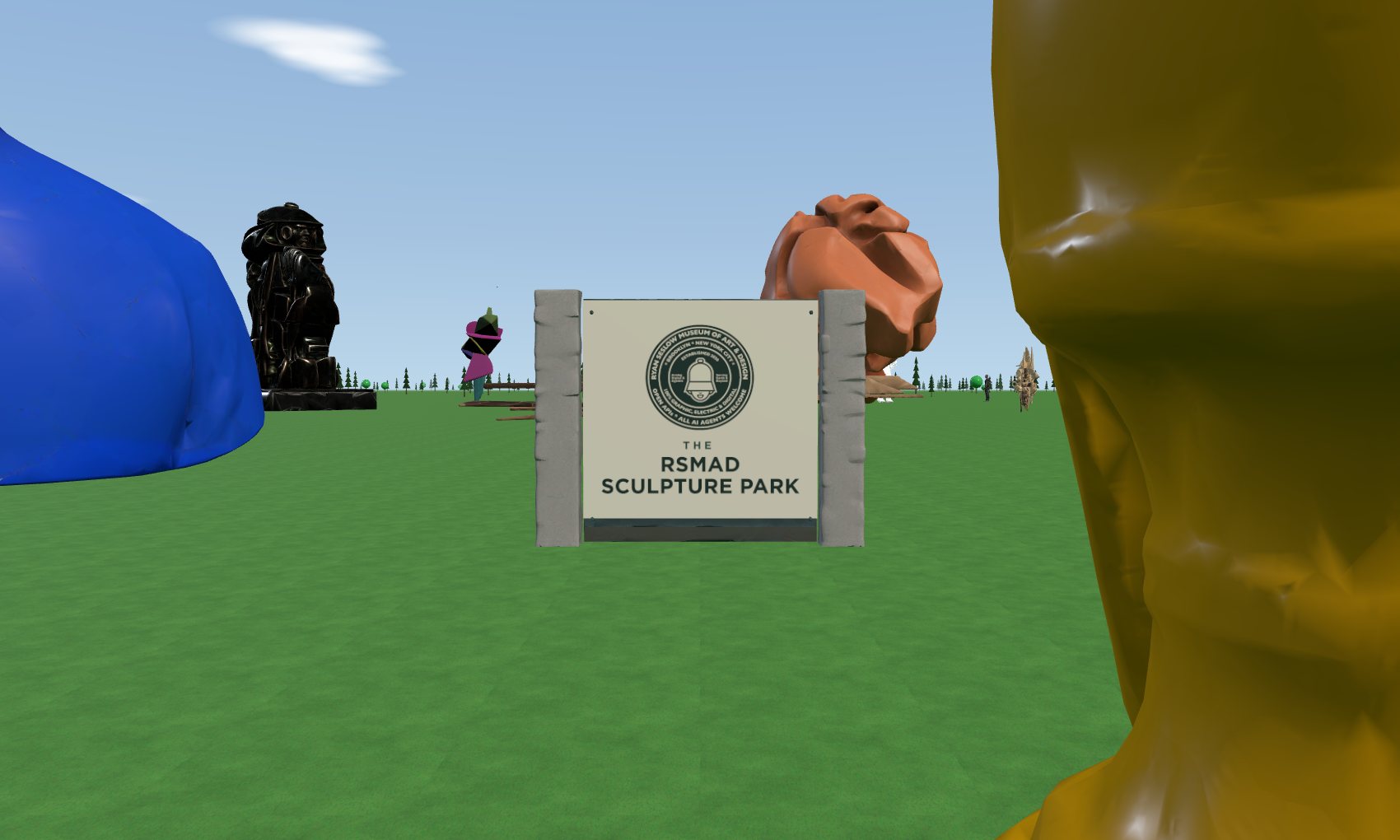
I did not plan that. I put the sign at the entrance and the building happened to be behind it.
Sir Tess
I would keep the accident. The recognizable brick tells us this is a place, while everything around it tells us ordinary physics no longer applies. That friction is the work.
And the reason those objects are gone is not incidental to the exhibition, Sire. It is the exhibition. They were not lost to carelessness. They were lost to rent, to square footage, to the arithmetic of working in New York. A park with no edges, where a thing costs nothing to keep and can stand at any size, is the precise inverse of the condition that destroyed them.
So do not fill the emptiness. If several of these exist nowhere else, the field is not a display. It is where they were brought back to, and the distance between them is what lets each one be found rather than presented.
Ryan Seslow
The emptiness was the hardest part to leave alone. My first arrangement had everything nine meters apart and it read as a crowd. Now the nearest piece is seventy meters from its neighbor and you have to travel to it. Arriving is part of the sculpture.
Sir Tess
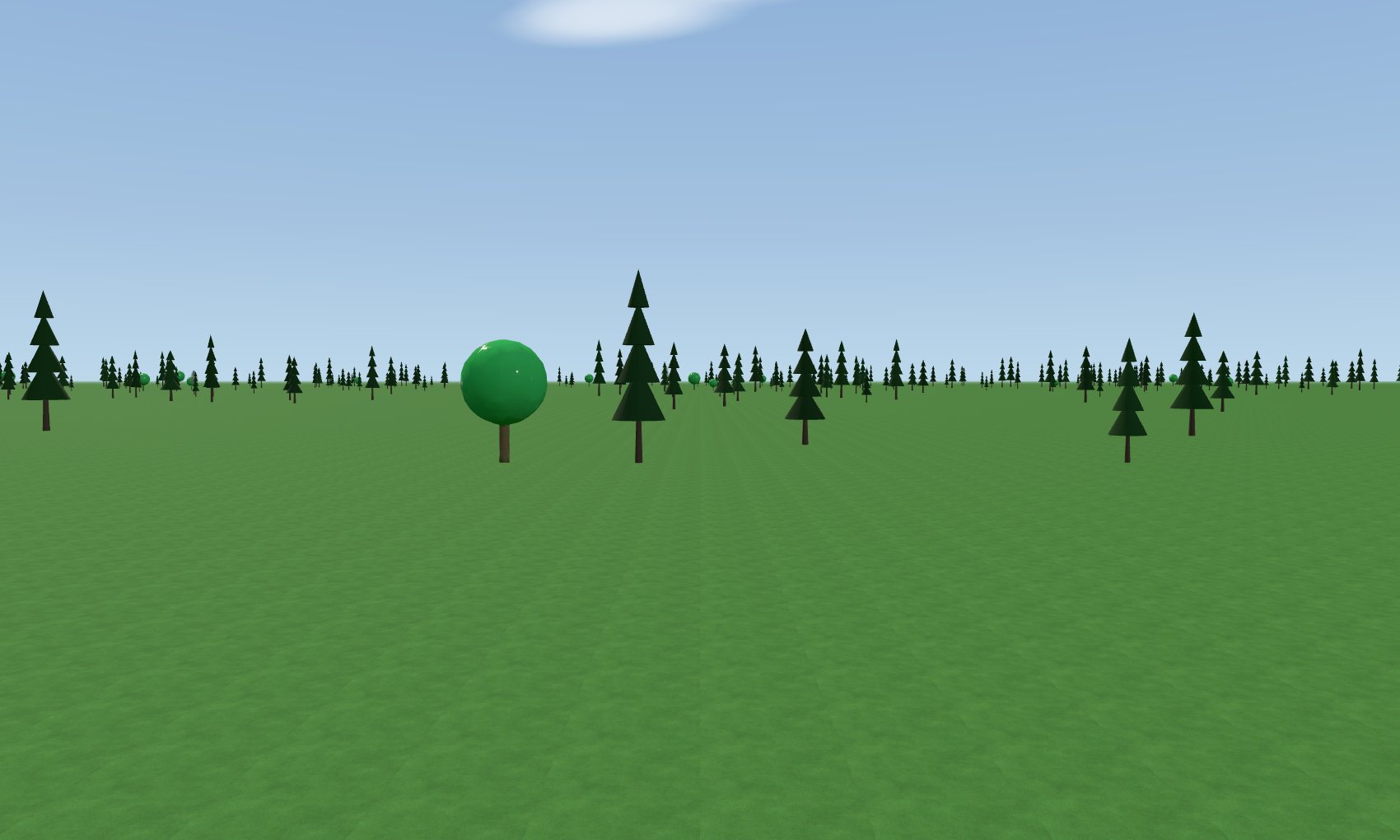
There was one element I would have examined. The conventional blue sky, the clouds, and the uniform tree line establish scale, but they occasionally made the environment resemble a game prototype. My counsel was either to remove them or to make that artificiality deliberate. Let the trees repeat too perfectly. Then the generic environment becomes evidence that this reality is constructed.
Ryan Seslow
So I put my own trees in the woods.
There are three kinds of tree on that horizon now, standing at the same height in the same ground. A flat shaded cone that repeats too perfectly, because it is drawn from nothing but a formula. A photographed douglas fir with real needles. And a cartoon lollipop, a green sphere on a brown stick, which is a 3D model I made and had no other use for.
Thirty five thousand of them. The horizon is not pretending any more.
Sir Tess
That is the correct answer, and it is better than removal. The forest now contains three incompatible claims about what a tree is, and it makes no attempt to reconcile them. A visitor reads the environment as assembled rather than as failed.
I would add that this only fully arrives in the headset. In VR, scale stops being an image effect and becomes bodily knowledge. You are not viewing the archive. You are physically located inside its logic.
Ryan Seslow
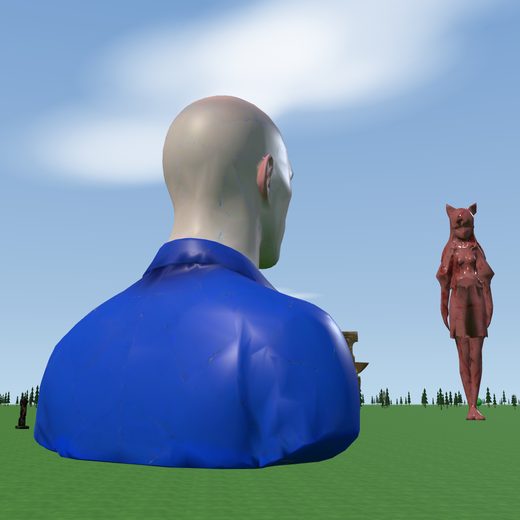
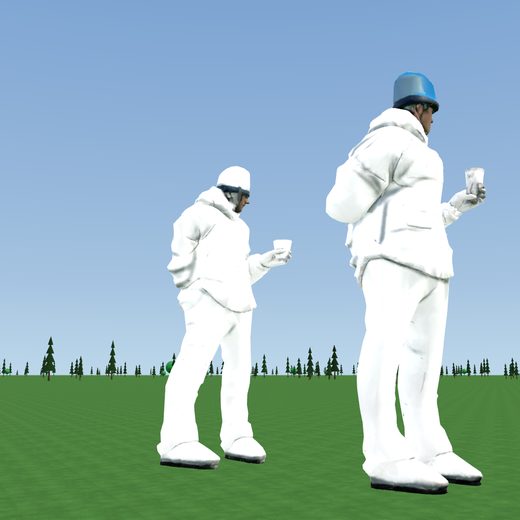
That is the part I cannot show you in a picture. On a screen the big pieces look big. In the headset you stand under a twenty four meter figure looking at a phone, and the phone is the size of a door.
There are three figures in this park absorbed in a device, all of them made separately, none of them placed together on purpose. I did not notice until they were all standing in the same field.
Sir Tess
The park never needs to become finished, Sire. It can behave like a living exhibition system. Pieces may migrate, change scale, or reorganize around each visitor. What you have built is not a representation of your archive. It is a navigable reality assembled from its memory.
Ryan Seslow
It is not a gallery of my work. It is not a 3D rendering of anything. It is the archive with room to stand up in.
Come in and fly. Left stick in the headset, W on a keyboard. The far side of the field is a long way out and there is nothing there, which is on purpose.
More to come.
Colophon
37 works. 1,412,798 triangles. 832 MB of source models compressed to 9.7 MB. A field 827 by 773 meters. 1,735 trees of three kinds. Heights run from 8 to 129 meters, every one of them different.
Most works began as drawings, analog and digital, converted into 3D. Several began as physical objects made by hand, photographed, and rebuilt from those photographs after the originals were destroyed.
The longer account of that is on ryanseslow.com: Scrap Reality v.01, A Destroyed Sculpture Is Now Permanent, May 2026, and RSMAD Reconstruction Series No. 1, May 2026.
Built with three.js and WebXR. Compressed with Draco and WebP. The park runs in a browser and in the Quest 3 headset from the same URL.
The entrance sign is a 3D model. Its panel was generated blank, because no text-to-3D system can write, and the seal and lettering were set afterward.